
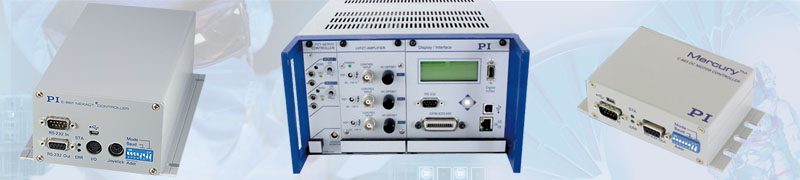
Drivers, Controllers and Motion Strategy
Controllers for Linear Actuators
Linear actuator performance depends not only on the mechanical actuator, but also on the controller, driver, feedback sensor, and motion-control strategy used to operate it.
Why the Right Controller Matters for Linear Actuator Performance
The right controller can make a major difference in the performance of a linear actuator. The mechanics define the available travel, load capacity, and basic resolution, but the driver and control strategy determine how well those capabilities are used. A poorly matched controller can limit speed, increase settling time, create vibration, reduce positioning accuracy, or waste power as heat.
Different actuator technologies require different drive electronics. Stepper-motor actuators need current-controlled stepper drivers with suitable microstepping, acceleration profiles, and resonance management. Servo-motor actuators require feedback-based control with properly tuned position, velocity, and current loops. Direct-drive linear motors need high-bandwidth servo drives, encoder feedback, and control algorithms that manage high acceleration without mechanical transmission losses.
Voice-coil actuators require smooth current control for fast, frictionless force generation over short strokes.
Piezo stack actuators need low-noise high-voltage amplifiers and, for closed-loop operation, high-resolution sensor processing. Ceramic motors, such as ultrasonic and PiezoWalk drives, require specialized excitation signals and operating modes matched to their friction-coupled motion principle.
Controller selection also affects efficiency. Proper tuning reduces current draw, heat generation, overshoot, and unnecessary mechanical stress. In precision automation, the best actuator performance comes from matching the actuator, feedback sensor, driver, and motion algorithm as one integrated system.
More Information
More information on drivers and controllers for linear actuators:
